




Synthetic polyester, soft steel, or bare wire rope - which round sling do you spec for the load you have to fly?
Rigging · Buyer's guide
Updated 12 May 2026
Rigging
Slings
Synthetic vs steel round sling. Which one to buy.
Nine kits in ten run synthetic polyester. The tenth has a reason. WLL, weight, abrasion, heat and cost compared - so you spec the right sling before the order goes out.
Synthetic polyester round slings cover roughly 80% of theatrical rigging by weight and load type.
Sustained heat above 100C, sharp abrasive edges, or a sling that lives in a permanent rig for years.
Tag the WLL, rerate per hitch under AS 4497, 12-month inspect. Audit-ready inventory, every season.
The cheapest sling on site is the one you already own, tagged, and trust. The most expensive is the one that fails an inspection an hour before doors.
Three options. One spec-led call.
This guide covers round slings used in overhead theatrical rigging - flying truss, motors, scenery, lighting bars. It does not cover flat webbing slings, chain slings, or ground-rigging strops for transport. All loads are assumed to be within AS 4991 lifting-equipment-for-entertainment scope and inspected before each use.
Three options sit on the shortlist. The cards below are the per-option headline; the table is the spec-led comparison. For context on how these sit inside the wider lifting-equipment regime, see our AS 4991 lifting equipment explained primer.
Synthetic polyester
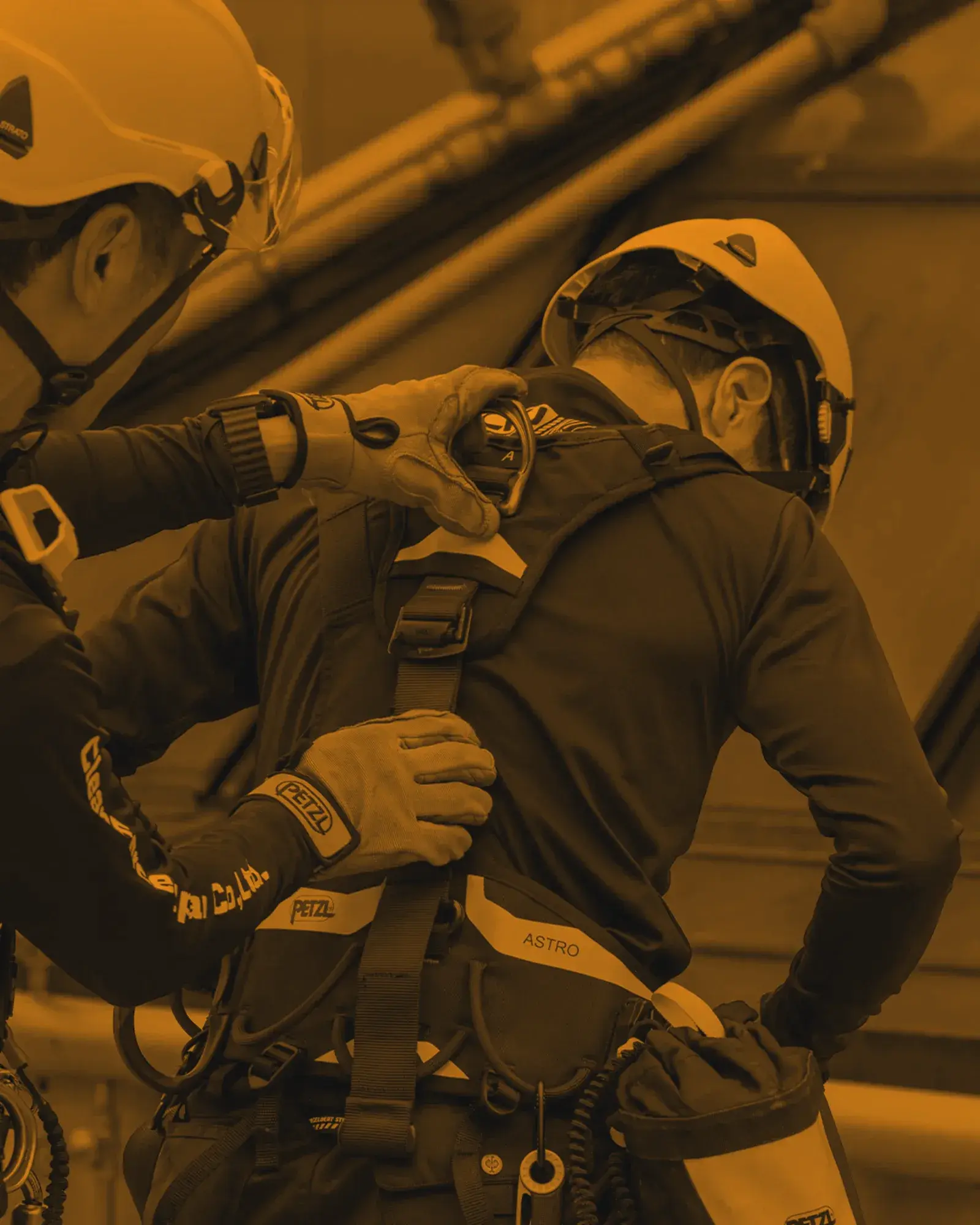
The continuous-loop polyester core carries the load; the sleeve is the wear indicator. Lightest to handle at height, and it will not mark painted or powder-coated truss.
Standard
AS 4497 (synthetic fibre), rated colour-code WLL.
Best for
Flying truss, motor pickups, lighting bars, soft scenery, fast-turnaround rigs.
What kills it
Sustained 100C+, sharp unprotected edges, chemical exposure, UV over time.
Soft steel
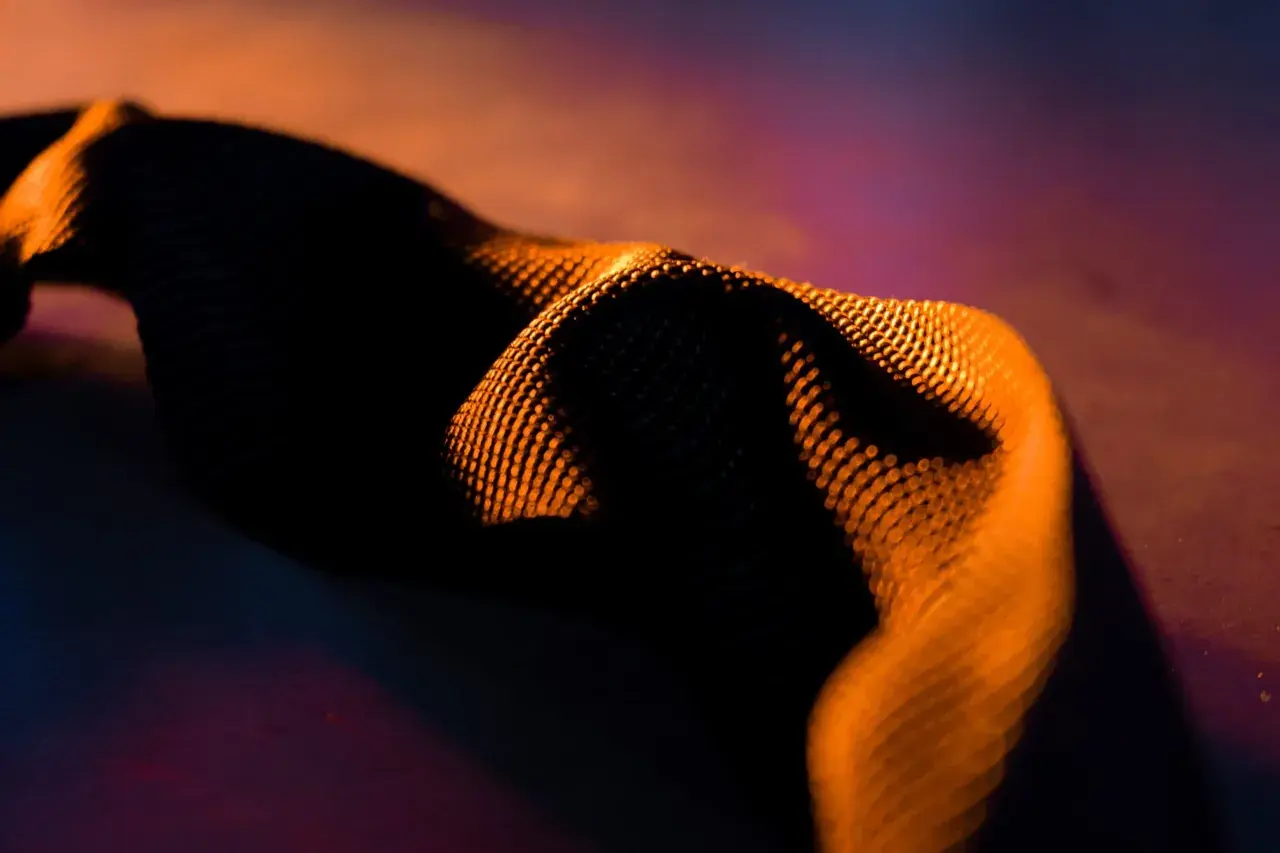
Handles like a fatter synthetic round but performs like wire. The answer when polyester will not survive the environment but a bare wire rope sling would mark the load.
Standard
No dedicated AS for the form factor; wire core to AS 3569 with a per-sling certificate.
Best for
Heat-affected positions, permanent rigs, heavy structural picks, controlled stretch.
What rules it out
Short-cycle production rigging where weight at height slows the crew.
Bare wire rope
The cheapest and most abrasion-tolerant of the three, and the one most likely to mark a finished load. For rigs that are industrial, engineered, and out of audience sight.
Standard
AS 1666.1 / AS 3569.
Best for
Bridle picks on raw steel, plant-room rigging, recovery and rescue rigs.
What rules it out
Anything painted, finished, soft-good, or in front of a paying audience without padding.
| Property | Synthetic polyester | Soft steel | Bare wire rope |
|---|---|---|---|
| Standard | AS 4497 (synthetic fibre) | No AS for soft steel round; wire core to AS 3569 | AS 1666.1 / AS 3569 |
| Typical WLL range | 1t to 30t (straight pull) | 2t to 50t | 1t to 50t |
| Weight per metre (2t WLL) | ~0.25 kg/m | ~0.9 kg/m | ~0.6 kg/m (no jacket) |
| Load protection | Soft jacket, won't mark painted truss | Polyester jacket over wire, low marking | Bare wire - will mark and bite |
| Max working temp | 100C (polyester core) | 200C+ (wire core) | 200C+ |
| Abrasion tolerance | Low - sleeve wears, then core | High once jacket is breached | Highest |
| Inspection cadence | Pre-use visual + 12-month tag | Pre-use visual + 12-month tag | Pre-use visual + 12-month tag |
| Service life | 5-10 years typical, condition-based | 10+ years typical | 10+ years, condition-based |
| Indicative cost | Lowest | Mid | Mid to high |
Buying one sling type? Buy synthetic.
If you are buying one sling type for general theatrical rigging, buy synthetic polyester round slings. They handle the load envelope for truss, motor pickups, lighting bars and most scenery flown in a venue or on tour. They are lighter to handle at height, they will not mark painted or powder-coated truss, and they sit inside AS 4497 with a rated colour-code system every rigger reads at a glance.
We default to them for roughly 80% of the stocked rigging kits we ship across the TSA rigging range. The core is a continuous loop of high-tenacity polyester yarn in a double-wall polyester sleeve. Once you see core yarn through the sleeve, the sling is retired - no exceptions.
Soft steel rounds and bare wire rope slings ship to order against a specifier sheet. We keep the common heat-affected and permanent-rig sizes in stock and ship Australia wide.
The edge cases where the default doesn't apply.
This is the tenth kit. Synthetic polyester is the default; the reasons to deviate are specific, and you usually know them up front:
- Heat above 100C at the sling. Pyro within 1m, HMI heads bearing on the rig, industrial process heat. Move to soft steel.
- The sling lives in the rig for years. Permanent installs, scene-shop fixed points, ceiling-grid pickups. Soft steel survives the inspection cycles; polyester gets retired on UV alone.
- Stretch must be zero. Paired motors lifting a rigid structure where 3% sling stretch translates to a visible twist. Spec wire-core.
- The load surface will cut polyester. Unprotected steel I-beam corners, threaded rod, cut plate. Wire rope or padded soft steel.
- Inspection paperwork is the deliverable. Some venue compliance regimes will not accept a soft-steel round without a per-sling certificate. Confirm with the venue before ordering.
Across all three, one habit holds: always pad over sharp edges. A 7:1 service factor on a synthetic round disappears fast when the sling crosses a 90-degree truss chord without a corner block.
And if the load needs adjustable length, multiple legs from one master link, or a load-rated shortening device, no round sling is the right tool. Move to a grade 80 or grade 100 multi-leg chain sling with rated shorteners, and rate the full assembly. We stock and certify those on request.
The WLL on the tag is for straight pull only.
All three options support all three hitches - straight pull, choke and basket. The WLL changes with the hitch. For synthetic rounds, read the tag and apply the AS 4497 multipliers; for soft steel and bare wire, use the manufacturer table. A choke is not a basket, and the rerate is not optional.
Pre-use, every shift: on synthetic, any cut, abrasion, chemical staining, or core fibre visible through the sleeve means retire. On soft steel, any jacket breach exposing core, kinks, or broken wires means retire. On bare wire, six broken wires in one lay length - or three in one strand in one lay length - kinks, birdcaging, or corrosion means retire.
At 12 months: tag and certificate inspection by a competent person, recorded against the sling's serial number. At retirement: cut the sling at both eyes before disposal so it cannot re-enter service. A retired sling in the wrong box is the failure waiting to happen.
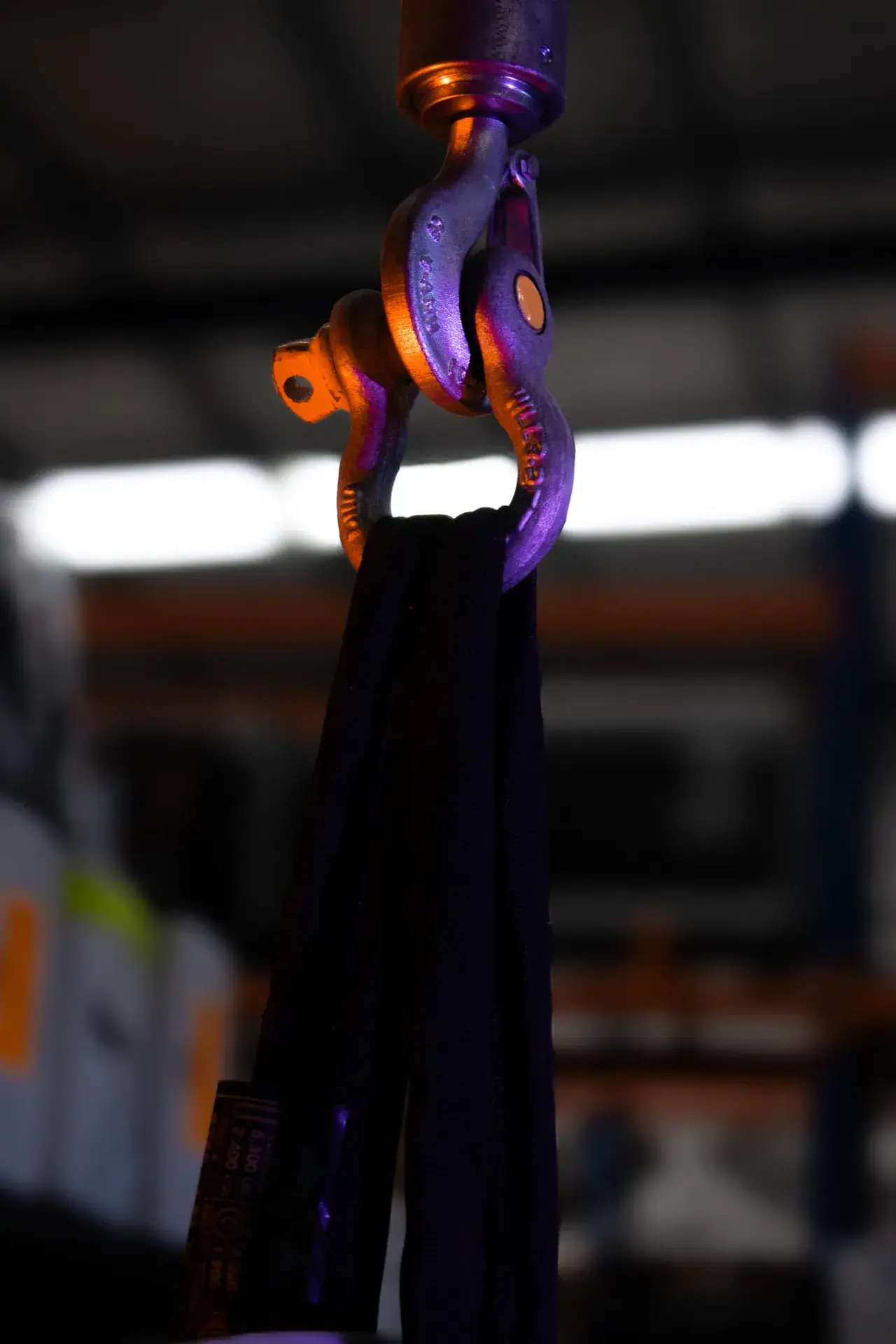
Quote against your load list. Not a catalogue page.
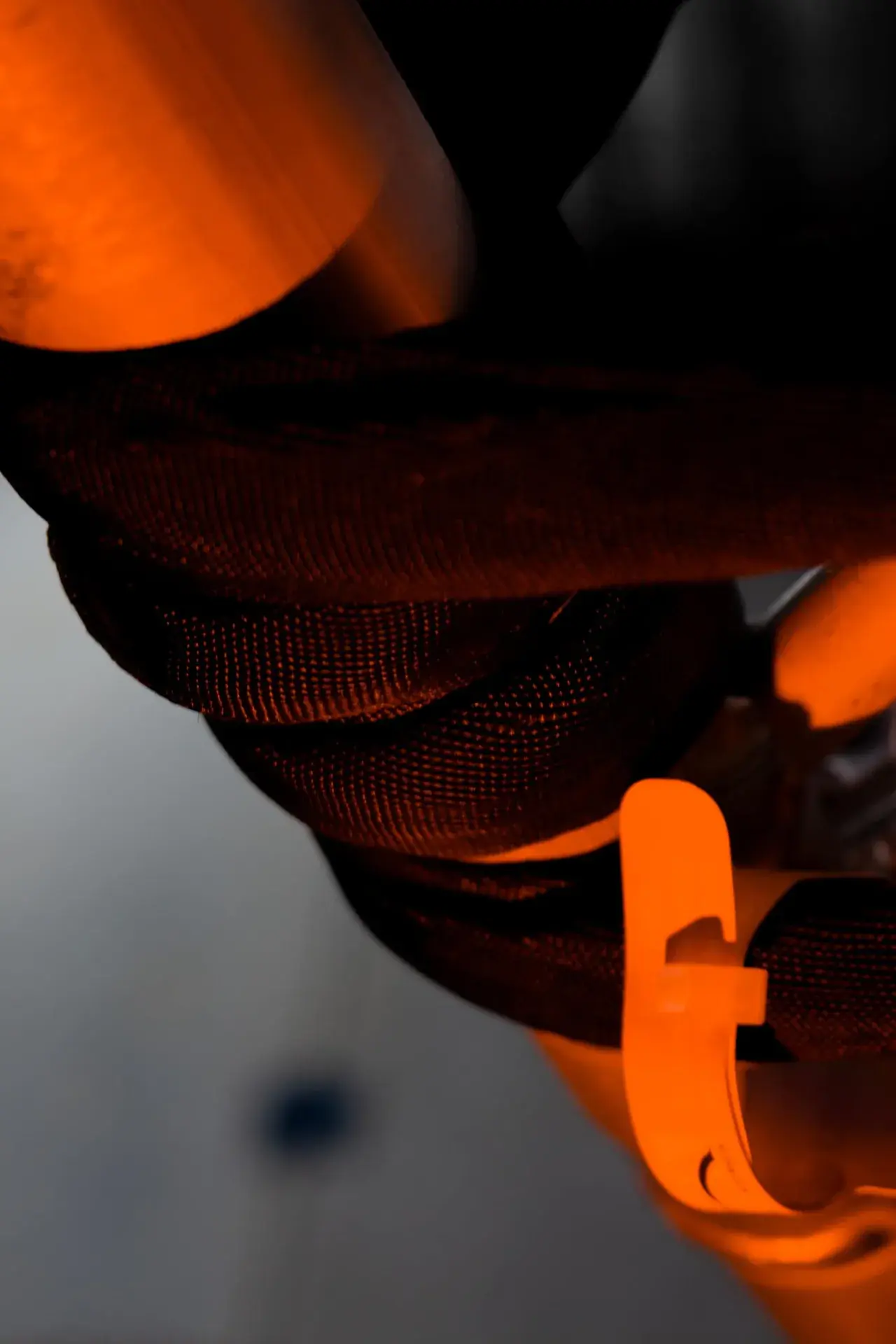
We stock the synthetic polyester round-sling range in full WLL colour-code, tagged to AS 4497, with traceable test paperwork on every unit. Soft steel rounds and bare wire rope slings ship to order against a specifier sheet.
If you are spec'ing a new venue kit or refreshing a touring inventory, we quote against your actual load list rather than a generic catalogue page. Every TSA sling carries a 12-month inspection tag and slots into our rigging inspection service schedule if you ask us to - tying the whole decision back to a documented, audit-ready inventory.
We've got the paperwork. You've got the show.
Spec'ing slings for a new kit or a refresh?
Talk to the team
Explore the range
Browse the rigging range or request a quote.
Send us your load list and we'll spec the right sling for each pick - synthetic, soft steel or bare wire - with traceable test paperwork on every unit. Australia wide.
Start a conversationFlying, lifting & rigging.
Slings, hoists, controllers, consumables and hardware - stocked, tagged, and certified under one roof.
Browse rigging at TSA